

Did you know that nearly 60% of homes in the U.S. have wet basements, and 38% run the risk of basement mold? As storm season approaches, you might be wondering how to protect your home from potential water damage. One effective solution is basement waterproofing. It’s a proactive measure that can save you a lot of trouble down the line. But what does basement waterproofing entail, and why is it so essential? Stick around, and we’ll explore these questions together.
Understanding Basement Waterproofing
Waterproofing your basement might seem like an intimidating task, but understanding the basics can make it a lot more manageable.
It’s not just about keeping your storage items dry; it’s about safeguarding your home’s structural integrity. So, let’s break it down.
Firstly, identify the source of any water infiltration. This could be from a leaky pipe or a crack in the wall. Without fixing this, any waterproofing effort won’t be effective.
Next, it’s essential to understand that waterproofing isn’t a one-size-fits-all solution. Options range from simple sealants applied to the walls and floors, to complex interior water drainage systems.
The right choice depends on your basement’s specific needs and your budget.
Lastly, remember that while DIY solutions can be cost-saving, they mightn’t always be the best route. Hiring professionals guarantees that the job is done right, and they often provide warranties for their work.
The Connection Between Basements and Storm Damage
Did you know that basements are the most vulnerable part of your home during a storm? Basements sit below ground level, making them a prime target for flooding and water damage. When heavy rainfall occurs, the excess water saturates the soil, increasing the pressure against your home’s foundation. This pressure can cause cracks to form, allowing water to seep into your basement.
Water damage doesn’t just stop at ruined belongings. It can also lead to mold and mildew growth, which can seriously affect your home’s air quality and your family’s health. In worst-case scenarios, water damage can even compromise the structural integrity of your home.
But don’t panic just yet! There’s a straightforward solution to this problem—basement waterproofing. It’s a process designed to keep water out of your basement, protecting your home from the destructive effects of storm damage.

Key Benefits of Basement Waterproofing
Countless benefits come with basement waterproofing, making it a worthwhile investment for any homeowner. It’s not just about making your basement a safe and dry place – it’s about protecting your entire home.
First, let’s talk about property value. Waterproofing increases your home’s worth by preventing water damage and structural issues. Buyers are more likely to purchase a home knowing it’s protected from the elements.
Secondly, a dry basement means a healthier home. Damp basements can breed mold and mildew, which, when inhaled, can lead to health problems like asthma and allergies. By waterproofing, you’re eliminating these potential hazards, contributing to a healthier living space for you and your family.
Thirdly, it promotes energy efficiency. Moisture in your basement can lead to higher humidity levels in your house, making your HVAC system work harder. Waterproofing reduces this humidity, helping your system operate more efficiently and potentially lowering your energy bills.
Lastly, you’ll have peace of mind. When storm season hits, you won’t be worrying about potential floods or damage. Instead, you’ll know your home is prepared and protected.
Waterproofing Methods for Basements
Now, let’s turn your attention to the practical solutions for waterproofing your basement.
We’ll look into two main techniques: interior and exterior waterproofing.
Both have their unique benefits and can be combined for ideal protection against storm-related water damage.
Interior Waterproofing Techniques
If you’re looking to safeguard your basement from water damage, interior waterproofing techniques offer a practical and effective solution. These methods involve fortifying your basement’s interior walls and floors against moisture ingress, ensuring that even in the harshest storms, your basement remains dry and damage-free.
One popular technique is the application of waterproofing sealants. These are typically acrylic or silicone-based coatings that you can spread over your basement walls and floor, creating a water-resistant barrier.
They’re easy to apply, cost-effective, and provide an excellent first line of defense against water intrusion.
Another technique is installing an interior drainage system. This system collects any water that enters your basement and channels it safely away.
It usually includes a sump pump to remove excess water, and a network of pipes embedded in your basement floor.
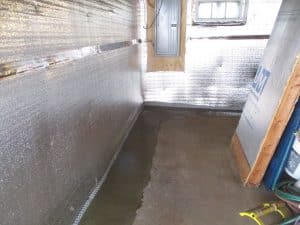
You might also consider basement tanking. This involves applying a waterproof membrane to your basement’s interior surfaces, creating a ‘tank’ that keeps water out.
It’s a more labor-intensive and costly technique, but it provides a high level of protection.
Exterior Waterproofing Solutions
While interior solutions can substantially improve your basement’s resistance to water, don’t overlook the importance of exterior waterproofing methods. They serve as your home’s first line of defense against water seepage, as they block moisture before it can even reach your basement walls.
One effective method is to install a waterproof membrane around your home’s foundation. This barrier, often made of rubber or plastic, is designed to repel water and direct it away from your home. It’s a significant investment, but it can save you from costly water damage repairs in the long run.
Another practical solution is to use French drains, which are trenches filled with gravel or rock, containing a perforated pipe that redirects surface water away from your home. It’s a straightforward, yet highly efficient way to prevent water from accumulating around your foundation.
Lastly, consider the slope of your yard. It should move away from your home, not towards it. If it doesn’t, consider regrading your yard to guide water away from your foundation.
Cost Considerations for Basement Waterproofing
Now, let’s talk about the financial aspect of basement waterproofing.
It’s important to understand the factors that influence the overall expense of your waterproofing project, so you can plan your budget accordingly.
We’ll also discuss practical strategies for financing your project, ensuring you’re well-prepared for this vital home improvement task.
Evaluating Waterproofing Expenses
Maneuvering the domain of basement waterproofing expenses can be an intimidating task. But don’t worry, you’ve got this. It’s all about understanding what you’re paying for and why.
The biggest factor in determining the cost of waterproofing your basement is the extent of the work that needs to be done. For minor issues, you might only need a simple sealant, which can cost around $500. More complex jobs, like installing a sump pump or interior drainage system, can run into the thousands.
It’s also important to evaluate the cost of labor. This can vary greatly depending on the company you choose, so it’s always a good idea to get multiple quotes.
Keep in mind, too, that while the upfront cost may seem steep, the long-term savings can be significant. Waterproofing your basement can prevent costly water damage repairs down the line, increase your home’s value, and, most importantly, give you peace of mind during storm season.
In the end, the goal isn’t to find the cheapest option, but the one that will provide the best protection for your home and fit within your budget.
Financing Your Waterproofing Project
You’ve evaluated the expenses and decided to invest in waterproofing your basement – a smart move.
However, if you’re feeling a little daunted about how to finance your project, don’t worry. There are manageable options you can consider.
First, check with your home insurance provider. Some companies might cover certain damages that make basement waterproofing necessary. This could greatly reduce your financial burden.
Secondly, consider a home improvement loan. Many banks offer these loans at competitive interest rates, making it easier to finance your project without breaking the bank.
Also, you can explore financing options with the waterproofing company themselves. Many companies offer flexible payment plans to make their services more accessible.
Don’t forget to factor in potential energy savings, too. A well-insulated basement can reduce your heating and cooling costs, providing you with long-term savings that help offset the initial cost.
Lastly, remember that this is an investment in your home’s value. Water damage can drastically decrease a property’s worth, so protecting your basement now can save you money in the future.
With careful planning and savvy decision-making, you can finance your waterproofing project without stress.
Finding a Reliable Waterproofing Contractor
Ever wondered how to find a reliable waterproofing contractor? It’s not as challenging as it seems. Start by asking for recommendations from friends or neighbors who’ve had similar work done. They’ll give you honest feedback on their experiences.
Next, do your own research. Look into a contractor’s reputation online. Check reviews and ratings on sites like Yelp or Angie’s List. Don’t forget to check their standing with the Better Business Bureau.
You’re looking for a contractor with a history of satisfied customers and few, if any, complaints.
Once you’ve narrowed down your options, request estimates. You’re not just looking for the cheapest bid, but rather the best value. Ask about the materials they’ll use, their proposed timeline, and any warranties or guarantees they offer.
Remember, communication is key. A reliable contractor should be willing to answer all your questions and explain their process in detail.
Don’t be afraid to ask for references, either. Speaking with past clients can give you a sense of a contractor’s reliability and professionalism.
Finding a reliable waterproofing contractor takes time, but it’s time well spent. After all, your home’s protection is worth the investment.
Conclusion
Don’t let storm season catch you off guard. Arm your home with robust basement waterproofing and turn the tide against water damage. It’s not just about keeping your basement dry; it’s about protecting your home’s foundation, fending off mold, and ensuring peace of mind. Remember, the cost of prevention is a mere drop in the bucket compared to the high price of repair. So, plunge into it, find a trustworthy contractor, and weatherproof your home today.

20 + years of experience! – It’s hard to find another company like ours. Our team of experts have decades of experience in residential and commercial construction, plumbing, masonry, and carpentry skills. Not just waterproofing …
5 Star Customer Satisfaction Guarantees! – We receive many compliments on our level of professionalism, cutting edge materials, hard working crews, cleanliness, and customer service: which is something hard to find in our industry. Our goal is to exceed your expectations from start to finish! We are here to alleviate your anxiety and will work our hardest to make sure that all of your concerns are achieved 100%.
