
A horizontal crack running across a basement wall is more than a cosmetic concern. It can indicate that pressure from the surrounding soil is pushing the foundation wall inward. Homeowners may also notice stair-step cracks, displaced concrete blocks, separation near the top of the wall, or an inward curve that becomes more visible over time.
These warning signs are especially concerning because continued wall movement can affect the structural stability of the basement and complicate future remodeling or home-sale plans. Fortunately, not every bowing wall requires exterior excavation or complete reconstruction.
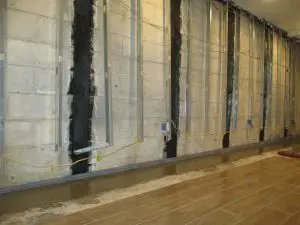
For qualifying foundation walls, carbon fiber straps for bowing basement walls provide a strong, low-profile reinforcement system that can be installed from inside the home. The straps stabilize the wall and help prevent additional inward movement without bulky steel beams occupying the basement.
A professional inspection is still essential. The right repair depends on the wall material, amount of displacement, crack pattern, moisture conditions, and source of the pressure.
What Causes Basement Walls to Bow?
Most bowing basement walls are affected by lateral pressure from the soil surrounding the foundation. Foundation walls are designed to withstand normal soil loads, but those loads can increase when drainage problems allow the ground to become heavily saturated.
Several conditions can contribute to wall movement:
- Expansive or water-retaining soil
- Hydrostatic pressure around the foundation
- Poorly draining backfill
- Improper grading around the house
- Clogged, damaged, or undersized gutters and downspouts
- Freeze-and-thaw cycles
- Heavy rainfall and seasonal snowmelt
- Tree roots or heavy loads near the foundation
- Aging block walls and deteriorated mortar joints
Homes throughout Southeastern Pennsylvania and Central New Jersey may experience a combination of seasonal precipitation, changing groundwater levels, and soil movement. When wet soil expands or becomes heavier, it exerts additional pressure against the exterior surface of the basement wall.
Concrete block walls often begin to bow near the center. A long horizontal crack may form along a mortar joint, sometimes accompanied by stair-step cracks near the corners. Poured concrete walls may develop horizontal, diagonal, or vertical cracking depending on how the pressure is distributed.
If you are unsure whether a crack is structural, learn more about Aqua Dry’s foundation crack repair services.
Warning Signs of a Bowing Foundation Wall
Foundation wall movement does not always begin with a dramatic crack. Early identification may provide more repair options and help prevent the displacement from becoming more severe.
Watch for these common warning signs:
- A horizontal crack across a block or poured concrete wall
- An inward curve or bulge near the center of the wall
- Stair-step cracking through block mortar joints
- Blocks that appear shifted or misaligned
- Cracks that widen from one season to another
- Separation where the wall meets the basement ceiling
- Floor joists pulling away from the foundation
- Water seepage through structural cracks
- Doors or windows above the foundation becoming difficult to operate
Not every crack means that the wall is actively bowing. Concrete can crack because of normal shrinkage, settlement, temperature changes, or construction joints. However, horizontal cracking and visible inward displacement should be evaluated promptly.
What Are Carbon Fiber Foundation Straps?
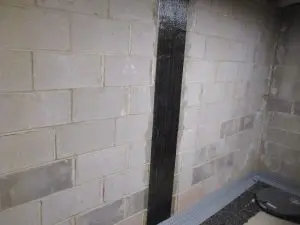
Carbon fiber straps are narrow strips made from high-strength carbon fibers combined with an epoxy resin. Once bonded to a properly prepared foundation wall, the material creates a rigid reinforcement that resists stretching.
The straps are installed vertically across the damaged area. Their purpose is to reinforce the wall and distribute stress across a larger surface instead of allowing pressure to remain concentrated along a crack or weakened mortar joint.
Carbon fiber is particularly useful for basement wall reinforcement because it is:
- Strong in tension
- Resistant to corrosion
- Lightweight
- Extremely thin
- Installed from inside the basement
- Compatible with many block and poured concrete walls
- Easier to conceal than traditional steel supports
Unlike steel, carbon fiber does not rust when exposed to normal basement humidity. The finished system also sits close to the wall, preserving valuable floor space.
How Carbon Fiber Straps Stabilize Bowing Basement Walls
Carbon fiber reinforcement is designed primarily to stop additional wall movement. The straps connect structurally sound sections of the wall and help the wall resist future lateral pressure.
It is important to understand that stabilization and straightening are not the same service. In many cases, carbon fiber straps secure the wall in its current position rather than pushing it back to its original alignment.
If a wall has already moved significantly, additional work may be required before or instead of installing carbon fiber. Possible alternatives include wall anchors, steel beams, bracing, excavation, rebuilding, or a repair plan developed with a structural engineer.
The Carbon Fiber Wall Repair Process
The exact installation method depends on the selected reinforcement system and the condition of the foundation. A professional carbon fiber wall repair generally includes the following steps.
1. Inspecting and Measuring the Wall
The contractor examines the entire wall rather than looking only at the most visible crack. The inspection may include measuring inward deflection, identifying displaced blocks, checking the condition of mortar joints, and looking for separation at the top or bottom of the wall.
The technician should also evaluate moisture and drainage conditions. Reinforcing the wall without addressing the source of excessive water pressure may leave an important part of the problem unresolved.
2. Preparing the Wall Surface
Paint, dirt, loose mortar, coatings, and other materials are removed from the areas where the carbon fiber will be bonded. The masonry or concrete surface must be sound, clean, and properly prepared so that the epoxy can form a reliable connection.
Surface preparation is one of the most important parts of the installation. Carbon fiber should not simply be placed over peeling paint, damaged masonry, or contaminated concrete.
3. Repairing Cracks or Deteriorated Areas
Depending on the wall and repair design, cracks, open mortar joints, voids, or damaged sections may need to be repaired before the straps are installed. This creates a more consistent surface and helps restore continuity across the affected area.
Crack repair alone, however, does not necessarily stabilize a bowing wall. The structural reinforcement and crack treatment perform different functions.
4. Establishing Structural Connections
Some carbon fiber systems use connections or brackets at the top, bottom, or both ends of the wall. These components help transfer loads into the floor system, foundation footing, or other structurally sound areas.
The anchoring requirements depend on the product, wall configuration, and site conditions. A qualified installer should follow the specifications of the selected system rather than using a one-size-fits-all approach.
5. Bonding the Carbon Fiber Straps
Structural epoxy is applied to the prepared wall, and the carbon fiber straps are installed vertically at calculated intervals. The material is saturated and pressed firmly against the wall to create continuous contact.
Once the epoxy cures, the straps form a rigid reinforcement system that helps the wall resist additional inward movement.
6. Reviewing Drainage and Water Management
Because soil saturation frequently contributes to foundation pressure, the repair plan may also include recommendations for grading, downspout extensions, exterior drainage, interior drainage, or basement waterproofing.
Homeowners experiencing seepage or recurring basement moisture can explore Aqua Dry’s basement waterproofing solutions.
Carbon Fiber Straps vs. Other Bowing Wall Repairs
Different foundation problems require different stabilization methods. The best system depends on wall displacement, accessibility, soil conditions, property boundaries, and structural requirements.
| Repair method | Typical application | Excavation required | Interior space used | Important consideration |
|---|---|---|---|---|
| Carbon fiber straps | Early-to-moderate movement in qualifying walls | Usually no | Minimal | Stabilizes the wall but may not straighten it |
| Steel I-beams | Walls needing rigid interior reinforcement | Usually no | Several inches | Strong but more visible and difficult to conceal |
| Wall anchors | Walls that may require stabilization or gradual adjustment | Yes, exterior access is generally needed | Wall plates remain visible | Requires sufficient exterior space |
| Helical wall anchors | Bowing or leaning walls requiring anchoring into stable soil | Exterior access required | Limited interior obstruction | Suitability depends on soil and property conditions |
| Excavation and rebuilding | Severely displaced or structurally compromised walls | Yes | Varies | More disruptive but may be necessary for advanced damage |
Carbon fiber is attractive because installation is relatively clean and does not usually require digging up landscaping. However, convenience should not be the deciding factor. The chosen repair must match the actual structural condition.
When Are Carbon Fiber Straps the Right Solution?
Carbon fiber may be appropriate when:
- The wall displacement remains within the limits of the selected system
- The wall is structurally sound enough to accept bonded reinforcement
- Blocks have not shifted or sheared excessively
- The footing and floor framing can support the repair design
- Active water infiltration can be corrected
- The goal is to prevent further inward movement
- A qualified professional confirms that carbon fiber is suitable
Some contractors use general displacement thresholds when discussing carbon fiber, but no single measurement determines suitability for every home. Wall height, construction material, crack location, block displacement, anchoring conditions, and manufacturer specifications must also be considered.
When Carbon Fiber May Not Be Enough
Another repair method may be necessary if the wall:
- Has severe inward displacement
- Is leaning substantially from the top
- Contains crushed, broken, or displaced masonry
- Has significant shearing along the bottom course
- Is separating from the floor framing
- Has inadequate structural support at the top or bottom
- Requires straightening rather than stabilization
- Is affected by ongoing soil or drainage problems that cannot be controlled
In advanced cases, a structural engineer may need to develop or approve the repair plan. Homeowners should be cautious of any recommendation made without measuring the wall and inspecting the surrounding conditions.
Benefits of Carbon Fiber Basement Wall Repair
When used in the right application, carbon fiber reinforcement offers several practical benefits.
Minimal Disruption
Most systems are installed entirely from inside the basement. This helps protect landscaping, walkways, patios, porches, and other exterior features.
Low-Profile Appearance
Carbon fiber straps are much thinner than steel beams and do not significantly reduce usable basement space. Depending on the system and finishing requirements, the repaired area may later be painted or incorporated into a finished wall.
Corrosion Resistance
Carbon fiber does not rust like exposed steel. This makes it well suited for basement environments where elevated humidity may be present.
Long-Term Stabilization
Once properly installed and cured, the reinforcement is designed to help prevent additional inward wall movement. Performance depends on correct surface preparation, spacing, anchoring, and water-management conditions.
Easier Future Monitoring
Because the straps sit directly against the wall, homeowners and contractors can continue monitoring exposed areas for moisture, new cracking, or other changes.
Can Carbon Fiber Straps Be Painted or Covered?
Many carbon fiber systems can be painted or concealed as part of a basement finishing project. However, homeowners should first confirm the finishing requirements with the installer.
The straps should not be covered until the epoxy has fully cured and the installation has been inspected. It may also be beneficial to keep portions of the foundation accessible for future monitoring, especially if the home has experienced moisture or structural movement.
Will Carbon Fiber Repair Help With Basement Leaks?
Carbon fiber straps reinforce the wall, but they are not automatically a complete waterproofing system. Structural cracks may allow water to enter, and hydrostatic pressure may contribute to both seepage and wall movement.
A complete solution may require a combination of:
- Structural wall reinforcement
- Foundation crack sealing
- Interior drainage
- Sump pump installation
- Exterior grading corrections
- Gutter and downspout improvements
- Humidity control
Treating the structural and water-management issues together can provide better long-term protection than addressing either problem in isolation.
Frequently Asked Questions
How long do carbon fiber foundation straps last?
Carbon fiber does not rust or corrode. A professionally installed system is intended to provide long-term reinforcement, although its performance depends on proper installation, compatible materials, sound attachment points, and control of the conditions affecting the wall.
Do carbon fiber straps straighten a bowing wall?
Usually, carbon fiber straps stabilize the wall in its existing position. They do not automatically return a displaced wall to its original alignment. Walls requiring straightening may need excavation, anchors, bracing, jacking, or another engineered solution.
Can carbon fiber straps repair horizontal foundation cracks?
They can reinforce walls affected by certain horizontal cracks, but sealing the crack and stabilizing the wall are separate tasks. An inspection should determine whether the crack represents active structural movement and whether carbon fiber is appropriate.
How many carbon fiber straps does a basement wall need?
The number and spacing depend on the wall height, length, material, degree of movement, framing connections, and specifications of the reinforcement system. Proper spacing should be determined during the repair design.
Can carbon fiber straps be installed on concrete block walls?
Yes, many carbon fiber systems can reinforce concrete block walls. The masonry and mortar must be evaluated and properly prepared so the system can bond to structurally sound material.
Are carbon fiber straps better than steel beams?
Neither method is universally better. Carbon fiber is thinner, corrosion-resistant, and easier to conceal. Steel beams may be more appropriate when the wall requires a different type of rigid support or when surface conditions prevent reliable carbon fiber bonding.
Will carbon fiber wall repair be acceptable when selling a home?
A documented professional repair can help demonstrate that a known foundation issue was addressed. Acceptance can depend on the installation, available permits, warranty, engineering documentation, lender requirements, and the findings of the buyer’s home inspector.
How much does carbon fiber basement wall repair cost?
Cost depends on the wall’s length, number of straps, crack repairs, anchoring requirements, accessibility, and whether waterproofing or drainage improvements are also needed. An on-site inspection is the most reliable way to obtain an accurate estimate.
Schedule a Bowing Basement Wall Inspection in PA or NJ
A horizontal foundation crack or visible inward curve should not be ignored. Early evaluation can help determine whether the wall qualifies for low-profile carbon fiber reinforcement or requires a different stabilization method.
Aqua Dry Basement Waterproofing provides foundation and basement solutions throughout communities in Pennsylvania and New Jersey. Review the company’s PA and NJ service area to see whether your community is covered.
For a professional evaluation, contact Aqua Dry Basement Waterproofing to request a free inspection, or call (215) 509-5087. The team will inspect the wall, identify the likely source of movement, and recommend a repair based on your foundation’s actual condition.

20 + years of experience! – It’s hard to find another company like ours. Our team of experts have decades of experience in residential and commercial construction, plumbing, masonry, and carpentry skills. Not just waterproofing …
5 Star Customer Satisfaction Guarantees! – We receive many compliments on our level of professionalism, cutting edge materials, hard working crews, cleanliness, and customer service: which is something hard to find in our industry. Our goal is to exceed your expectations from start to finish! We are here to alleviate your anxiety and will work our hardest to make sure that all of your concerns are achieved 100%.