
Out of sight, out of mind—that is how most homeowners treat their crawl space. However, what happens beneath your living space directly impacts your home’s air quality, structural integrity, and monthly energy expenses. In regions like Pennsylvania and New Jersey, vented dirt crawl spaces trap moisture, foster mold, and drain heating and cooling efficiency year-round.
If you suspect issues beneath your floors, recognizing the warning signs early can save you thousands in structural repairs and utility bills. Here is how to tell if your home needs professional crawl space encapsulation.
The Stack Effect: Why Your Crawl Space Controls Indoor Air Quality
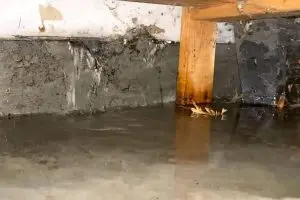
To understand why a damp crawl space affects your living room, you must understand building physics and the Stack Effect. Warm air naturally rises and escapes through your attic and upper levels, creating a vacuum that pulls air upward from the lowest point of your home—your crawl space.
The 50% Air Quality Rule:
Up to 50% of the air you breathe on the first floor of your home originates directly from your crawl space or basement. If your crawl space harbors mold spores, damp dirt, or rodent droppings, those microscopic pollutants circulate into your living rooms and bedrooms every hour.
4 Clear Signs Your Crawl Space Needs Encapsulation
1. Musty Odors That Won’t Go Away
If you notice a persistent, earthy smell in your home that worsens during humid summer months or after heavy rainstorms, humid air under your floor is likely decomposing wood joists, organic debris, or fiberglass insulation. Covering the smell with air fresheners only masks an active microbial growth problem beneath your feet.
2. Unexplained Spikes in Utility Bills
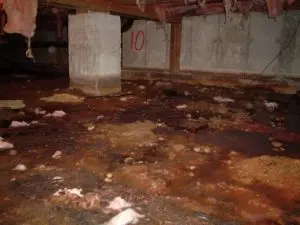
Vented crawl spaces allow freezing winter winds and muggy summer air to flood under your floorboards. This forces your HVAC system to work overtime to condition floors that are constantly chilled or heated from below. Encapsulation seals off exterior vents, transforming your crawl space into a semi-conditioned space and cutting heating and cooling costs significantly.
3. Sagging, Soft, or Cold First-Floor Surfaces
High humidity levels in a dirt crawl space are absorbed directly by structural floor joists and subflooring. Over time, wood rot weakens joists, causing floors upstairs to creak, feel soft underfoot, or sag. Additionally, wet fiberglass insulation sags under its own moisture weight and falls away from the subfloor, leaving your feet cold during winter months.
4. Pest Infestations & Wood-Boring Insects
Insects like termites, carpenter ants, and powderpost beetles—along with mice and rats—thrive in dark, damp environments. Open crawl space vents provide an open door, while high humidity levels create the ideal environment for pests to nest and destroy structural timber.
Vented Crawl Space vs. Full Encapsulation System
| Feature | Traditional Vented Crawl Space | Full Encapsulated System |
|---|---|---|
| Moisture Control | Pulls humid outdoor air directly inside | 100% Sealed: Multi-ply vapor barrier locks out earth & air moisture |
| Indoor Air Quality | High risk of mold spores, allergens & pest dander | Clean Air Zone: Paired with commercial dehumidification |
| Energy Efficiency | High energy loss through unconditioned floors | Up to 15%–20% Savings: Creates insulated thermal boundary |
What Does Professional Encapsulation Involve?
Transforming a damp crawl space into a clean, dry, storage-ready space involves a complete structural sealing process:
- Debris Removal & Ground Prep: Clearing out old debris, decayed insulation, and leveling dirt beds.
- Wall & Floor Vapor Barrier Installation: Laying a heavy-duty, puncture-resistant 12-to-20 mil reinforced vapor barrier across the ground and up all masonry foundation walls.
- Sealing Vents & Penetrations: Mechanically sealing all foundation vents, rim joist gaps, and pipe penetrations against outdoor air infiltration.
- Commercial Dehumidification: Installing a dedicated self-draining dehumidifier unit to maintain relative humidity below 55% permanently.
Frequently Asked Questions
Q: How long does crawl space encapsulation last?
High-grade 12-to-20 mil vapor barriers do not rot or tear easily. When installed by professionals and paired with a reliable dehumidifier, an encapsulation system will protect your home for 20+ years.
Q: Can I use a crawl space for storage after it is encapsulated?
Yes! Once fully encapsulated, your crawl space becomes a bright, clean, dry, and odor-free area perfect for storing seasonal items without fear of mold or water damage.
Q: Will encapsulating my crawl space increase my home’s resale value?
Yes. Real estate buyers and inspectors aggressively evaluate crawl spaces for rot, mold, and moisture. A clean, encapsulated crawl space with a transferable warranty is a strong selling feature that protects home valuation.
Transform Your Crawl Space Today
Take control of your home’s air quality, structural stability, and energy costs. Contact Aqua Dry Basement Waterproofing for a comprehensive crawl space inspection across PA & NJ. CALL NOW: (215) 509-5087

20 + years of experience! – It’s hard to find another company like ours. Our team of experts have decades of experience in residential and commercial construction, plumbing, masonry, and carpentry skills. Not just waterproofing …
5 Star Customer Satisfaction Guarantees! – We receive many compliments on our level of professionalism, cutting edge materials, hard working crews, cleanliness, and customer service: which is something hard to find in our industry. Our goal is to exceed your expectations from start to finish! We are here to alleviate your anxiety and will work our hardest to make sure that all of your concerns are achieved 100%.