

Did you know that over 60% of U.S. homes experience below-ground wetness? You’re not alone if you’re battling to keep your basement dry year-round. But, wouldn’t it make your life easier if you knew the exact steps to prevent moisture seepage, control humidity levels, and maintain a dry, mold-free environment? While there’s no one-size-fits-all solution, we’re here to guide you through a range of effective strategies that you can tailor to your specific situation. Stick around to discover more.
Understanding Basement Moisture Sources
Identifying the sources of basement moisture is the first step towards maintaining a dry basement.
You’ve got to understand that moisture can invade your basement from various sources, both internal and external.
Internally, humidity can be a major culprit. Everyday activities like showering, cooking, even breathing, can increase the moisture level in your home. This moisture can then condense on cooler basement surfaces, creating dampness.
It’s why you should always use fans and vents to reduce humidity levels.
Externally, rainfall and groundwater can seep into your basement if not properly diverted. If your gutters are clogged or downspouts aren’t directing water away from your home’s foundation, you’re inviting trouble.
Also, if the ground around your home doesn’t slope away from the foundation, water can pool and eventually find its way into your basement.
Additionally, plumbing leaks can lead to basement moisture. Even a tiny leak can cause dampness over time, so do regular check-ups to spot any issues early on.
Importance of Proper Landscaping
A significant part of keeping your basement dry hinges on the importance of proper landscaping. It’s not just about making your yard look good; it’s also about directing water away from your home’s foundation.
You mightn’t realize it, but the slope of your yard plays a vital role in keeping your basement dry. If the land around your home slopes towards the house, you’re inviting water straight into your basement. Instead, you want the ground to slope away from your home, directing water into your yard or the street, not your basement.
Choosing the right plants and their placement is also important. Plants with deep, extensive root systems can help absorb excess water in the soil, reducing the chances of it seeping into your basement. However, you’ll need to be careful when planting near your home’s foundation. Some plants’ roots can cause damage if they grow too close.
Lastly, consider installing a French drain or a dry well. These landscaping features help manage water runoff and can be a significant part of your strategy to keep your basement dry.
Waterproofing Your Basement Walls
While good landscaping sets the stage for a dry basement, waterproofing your basement walls greatly bolsters your defense against moisture. It’s an essential step to maintain a dry basement, and here’s why: walls are a common entry point for water. Thus, a well-executed waterproofing strategy is critical.
First, inspect your basement walls for cracks or leaks. Even the smallest cracks can allow water to seep in, so don’t overlook anything. Apply a quality waterproof sealant over these areas. It’s a quick fix that’ll block moisture effectively.
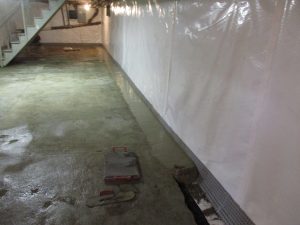
Next, consider installing a waterproof membrane. This barrier consists of a durable plastic material that keeps water out. You’ll need to attach it tightly against your basement walls, ensuring no gaps where water can enter.
For a more thorough solution, you could apply a waterproof coating to your walls. This involves a mixture of cement and a waterproofing compound that forms a solid barrier against moisture.
It’s a more labor-intensive option but provides a longer-lasting solution.
Basement Floor Sealing Techniques
Sealing your basement floor is another effective step in your battle against moisture. It’s a critical process that helps to prevent water from seeping up through your basement floor.
There are a few different techniques you can use, each with its own set of advantages.
One popular method is epoxy sealing. This involves applying a thin layer of epoxy, a type of resin, over your basement floor. It’s a strong, durable solution that’s resistant to water, mold, and mildew. It’s also easy to clean and maintain, making it a favorite for many homeowners.
Concrete sealing is another option. This method uses a concrete sealer to fill in the pores and capillaries in the concrete, creating a waterproof barrier. It’s a more affordable option than epoxy and can last for several years with proper care.
Lastly, you can opt for a polyurethane sealant. This is a flexible, water-resistant sealant that’s great for basements that experience shifting or movement. It’s a bit more expensive than the other options, but it provides excellent protection against water and is resistant to abrasion and chemicals.
Choose the method that best suits your needs and budget.
Maintaining a Dry Basement Environment
Keeping your basement dry isn’t just about sealing floors, it’s also about maintaining a dry environment overall. Establishing this requires regular maintenance and proactive measures to prevent any moisture from accumulating.
Firstly, make sure your home’s gutters and downspouts are clear and functioning well. They’re your first defense against water intrusion, as they direct rainwater away from your home’s foundation. If they’re blocked or broken, water can pool and eventually seep into your basement.
Next, consider your landscaping. Slope the ground away from your home to encourage water to flow away from the foundation. Avoid placing plants too close to the house as they can retain moisture and promote dampness.
Inside the basement, look for any signs of condensation. This could be an indication of high humidity levels. Insulating your pipes can prevent this problem.
Finally, don’t overlook regular maintenance. Regularly check and repair any cracks or leaks in your basement walls and floor.
Effective Dehumidifying Methods
Next, let’s explore effective dehumidifying methods that can help keep your basement dry.
We’ll start with understanding the basics of dehumidifiers, then we’ll guide you on how to choose the right dehumidifier for your specific needs.
Understanding Dehumidifiers Basics
While you may not realize it, dehumidifiers play an essential role in maintaining a dry basement. These devices work by reducing and maintaining the level of humidity in the air. This is vital because excess moisture can lead to mold growth and other potential damage to your basement.
At its core, a dehumidifier is a simple device. It draws in air from your basement, cools it down, and then reheats it. This process causes the moisture in the air to condense and be collected in a reservoir, which you’ll need to empty periodically. The dry air is then reheated and released back into your basement, helping to maintain a healthy level of humidity.
Understanding the basic operation of a dehumidifier will help you effectively use one in your basement. It’s essential to highlight, though, that not all dehumidifiers are created equal. Some are better suited for larger basements, while others may be more energy-efficient.
But don’t worry, we’ll explore choosing the right dehumidifier in our next section. For now, just remember that a dehumidifier is a key tool in keeping your basement dry all year round.
Choosing the Right Dehumidifier
Now that you understand the basics of how a dehumidifier works, it’s time to reflect on which one is best for your basement. Your choice should be centered around two key factors: the size of your basement and the extent of the humidity problem.
If you’re dealing with a small basement that just feels a bit damp, a small, portable dehumidifier may suffice. They’re affordable, easy to move around, and can handle up to 30 pints of water per day.
On the other hand, if your basement is larger or seriously damp, you’ll need a dehumidifier with more capacity, say 50 to 70 pints per day.
The next aspect to contemplate is energy efficiency. Look for Energy Star certified models. These machines use less electricity, saving you money in the long run.
Lastly, think about features. A dehumidifier with an automatic shut-off, auto-defrost, and direct drain can make maintaining the right level of humidity effortless.
Your basement’s size, the level of humidity, the model’s energy efficiency, and desired features should guide your decision.
Dehumidifier Maintenance Tips
Proper maintenance of your dehumidifier is of utmost importance to confirm its longevity and effectiveness. Regular upkeep guarantees that your unit operates at peak performance, reducing moisture levels in your basement and preventing problems like mold and mildew.
First, you’ll want to clean the reservoir frequently. It’s where water accumulates, and if not cleaned, it can become a breeding ground for bacteria. Empty the tank and wipe it down with a mild detergent at least once a week.
Next, pay attention to the air filter. It traps dust and debris that could harm the dehumidifier’s internal parts. Clean or replace it as per the manufacturer’s guidelines, typically every few months.
Lastly, don’t overlook the coils. Dust buildup on the coils can impede the dehumidifying process. Gently vacuum them using a brush attachment, ensuring to avoid damaging the delicate fins.
It’s also a good practice to unplug and store your dehumidifier if you’re not using it for an extended period. This prevents unnecessary wear and tear.
Regular Basement Inspection Practices
Although it might seem tedious, conducting regular basement inspections is a crucial step in keeping your basement dry. By doing this, you’ll be able to spot any potential moisture issues early on, preventing them from escalating into serious, costly problems.
It’s recommended to inspect your basement at least twice a year, more frequently during periods of heavy rain or snow. Start by checking for signs of water seepage such as damp spots, discoloration, or a musty smell.

It’s important to look for cracks in the walls and floor, as these can allow water to seep in.
Next, inspect your gutters and downspouts. They should be clear of debris and directing water away from your home’s foundation. If they’re not, this could be a major source of basement moisture.
Professional Solutions for Persistent Moisture
Despite your best efforts with regular inspections, there may be times where moisture issues persist in your basement.
Don’t be disheartened; sometimes, professional intervention is necessary to tackle persistent moisture problems.
Consult a professional waterproofing company for thorough solutions. They’ll perform a detailed inspection and identify the root cause of the persistent moisture.
Solutions may range from interior waterproofing, which involves installing waterproof membranes or coatings on your basement walls, to exterior waterproofing that prevents water from entering your basement in the first place.
A professional might recommend a sump pump installation if your basement sits below the water table. This device collects excess water and discharges it away from your home.
They might also suggest a dehumidifier to reduce dampness and maintain a healthy humidity level.
Drainage systems, such as French drains, can also be effective. These divert water away from your home, preventing it from causing dampness in your basement.
Just like a ship’s captain keeps his vessel afloat, you must steer your basement clear of moisture’s treacherous waters. Remember to grade your yard, seal those sneaky cracks, and engage the trusty dehumidifier. Let landscaping be your anchor and regular inspections your compass. With these tools at your helm, you’re set to navigate all seasons. Don’t let your basement become a damp, moldy shipwreck – take the helm and keep it dry year-round.

20 + years of experience! – It’s hard to find another company like ours. Our team of experts have decades of experience in residential and commercial construction, plumbing, masonry, and carpentry skills. Not just waterproofing …
5 Star Customer Satisfaction Guarantees! – We receive many compliments on our level of professionalism, cutting edge materials, hard working crews, cleanliness, and customer service: which is something hard to find in our industry. Our goal is to exceed your expectations from start to finish! We are here to alleviate your anxiety and will work our hardest to make sure that all of your concerns are achieved 100%.
